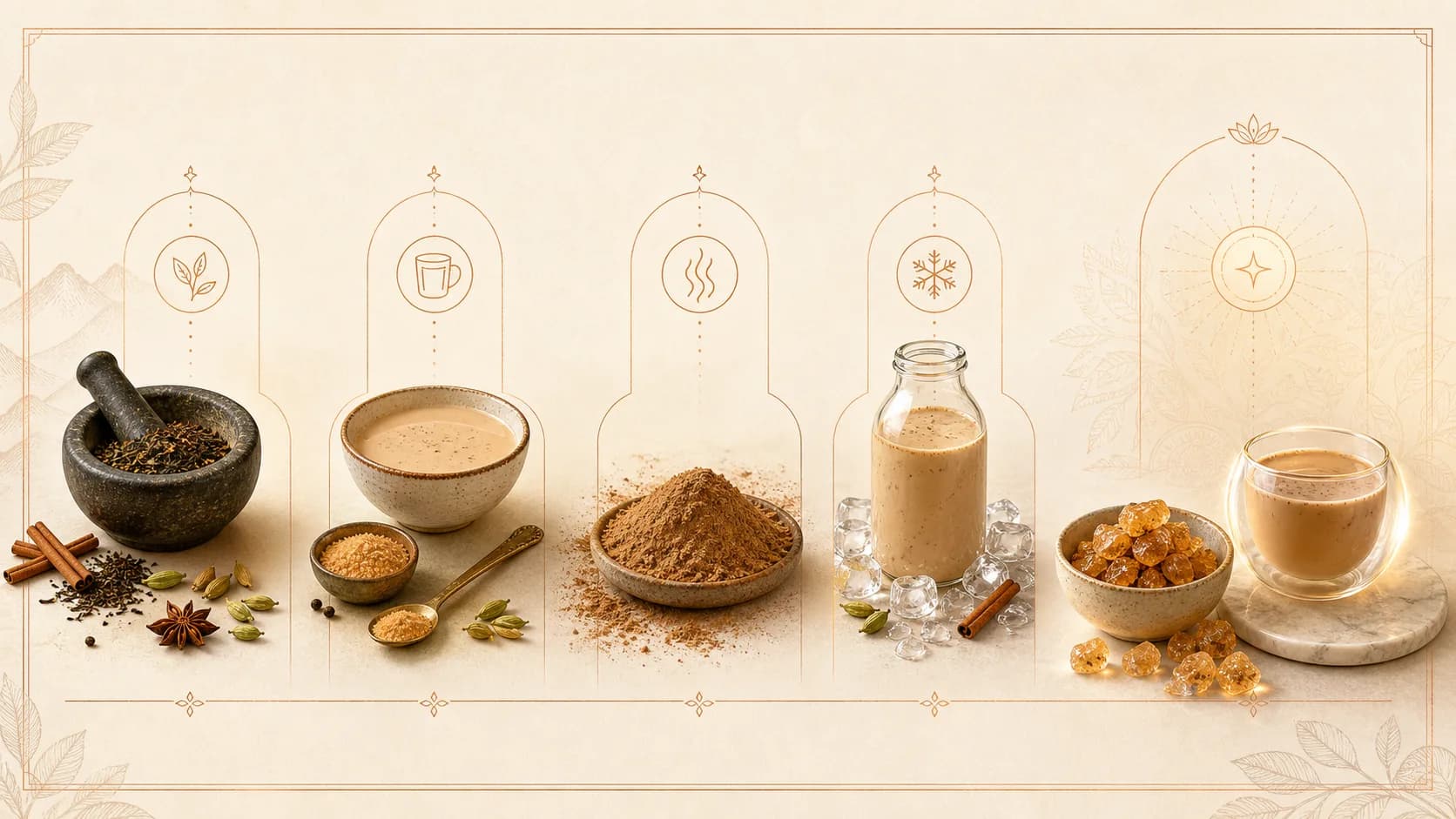
Brew first
The tea and spices are extracted together in the pot before drying, instead of asking raw powder to become chai in the mug.
Science of freeze-dried chai
Freeze-drying sounds technical because it is. The practical idea is simple: make real chai first, strain it clean, freeze it, then remove water under vacuum.
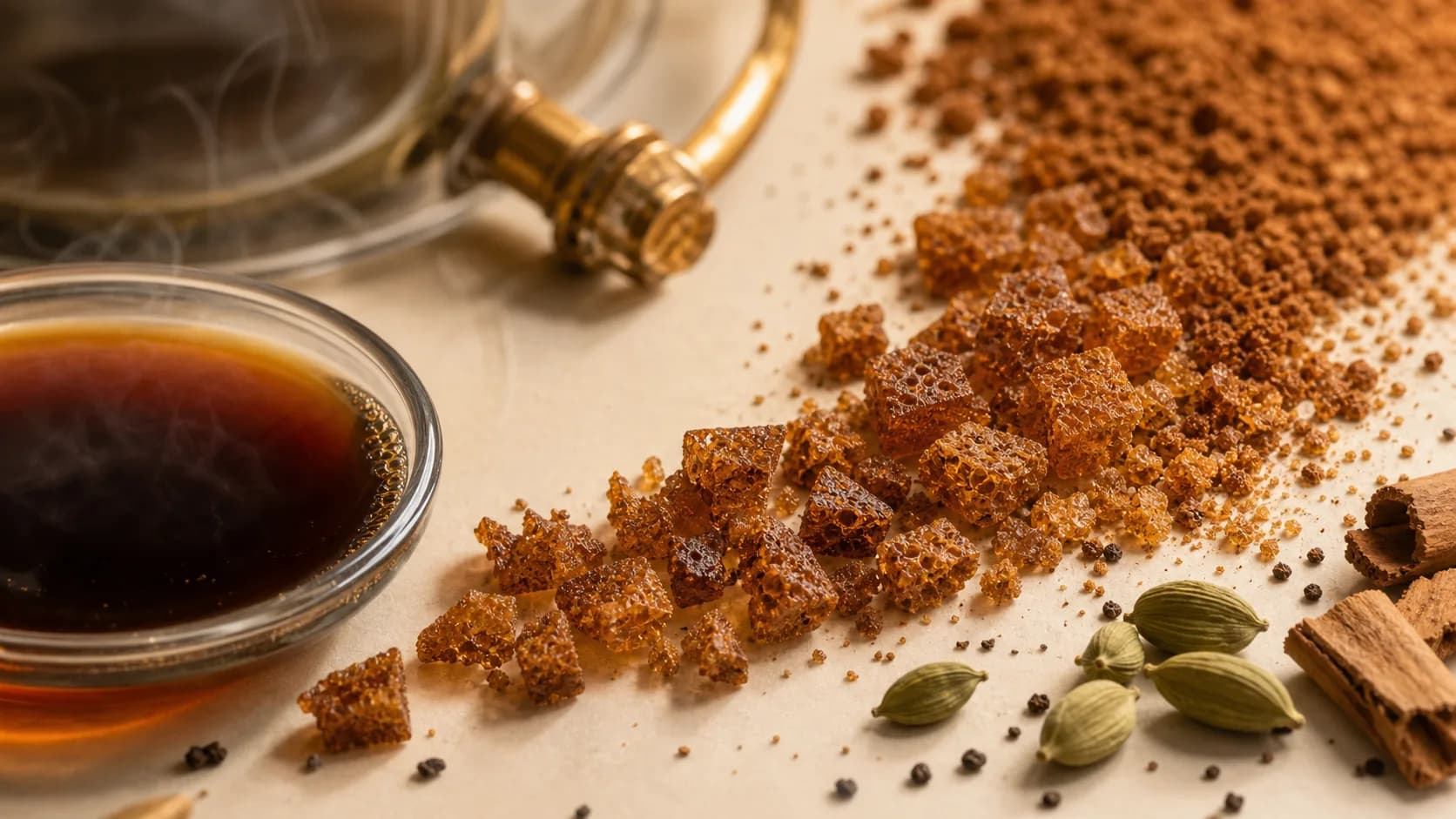
Not magic. Respect for the brew.
A slower process for a cleaner, more controlled cup.
The process
Anna's Chai is not raw leaf powder and not a generic latte base. It is brewed masala chai, concentrated, strained, freeze-dried, and packed as a dairy-free powder.
Black tea, ginger, cardamom, cloves, cinnamon, and pepper are simmered like real chai.
Leaves and whole spices come out before drying, so the final cup stays clean.
The brewed liquid is cooled before entering the freeze-drying process.
The chai freezes into a solid matrix at very low temperature.
Water leaves by sublimation instead of a hot boil-off step.
Dry crystals are packed away from heat, air, and steam.
Why it matters
The tea and spices are extracted together in the pot before drying, instead of asking raw powder to become chai in the mug.
Leaves and whole spices are removed before freeze-drying, which is why the finished cup can dissolve without sediment.
Freeze-drying removes water from frozen brewed liquid by sublimation, helping the concentrate become shelf-stable without a freezer.
The product stays dairy-free and smooth so customers can choose milk, water, sweetness, and strength for themselves.
Method comparison
Most instant chai starts with shortcuts. Anna's starts with the pot: brew the tea and whole spices, strain the liquid clean, then remove water so the pantry format still respects the original cup.
Ingredients extract in your mug instead of in Anna's pot.
Built for cafe speed, often with less control for the customer.
Spray-drying turns liquid into powder with hot air. It is fast, but heat can carry volatile tea and spice aromas away with the water.
Can taste good, but it asks the customer and shipper to manage cold storage.
The finished brew is frozen first, then ice is removed under vacuum without the same blast of hot air. That gentler path helps more aroma and brewed character reach the cup.
Claims boundary
Freeze-drying is not automatically better for every food or every tea product. Anna's uses it because this product starts as brewed chai concentrate and needs to stay smooth, shelf-stable, flexible, and close to the pot it came from.
Compared with frozen liquid chai, the advantage is shelf-stable storage. Compared with many high-heat drying methods, the advantage is a gentler path for delicate aromatics. Compared with raw microground blends, the advantage is avoiding leaf and spice grit because the brew is strained first.
Detailed comparison
Powders and concentrates are built for different jobs. This table keeps the practical customer tradeoffs visible without claiming one method wins every scientific category.
| Customer need | Raw ground blends | Sweet latte mixes | Heat-dried bases | Frozen liquid chai | Anna's freeze-dried brewed chai |
|---|---|---|---|---|---|
| Real brewed taste | Extracts in your cup | Often masked by sweetness | Hot air can carry volatile aromatics away | Can taste brewed | Starts as brewed chai; frozen before drying |
| Smoothness | Can leave grit | Usually smooth but premixed | Usually smooth | Smooth liquid | Brewed and strained clean |
| Pantry convenience | Pantry-stable | Pantry-stable | Pantry-stable | Needs freezer | Pantry-stable |
| Cup control | You still need to extract it | Often pre-sweetened and dairy-based | Varies by formula | Usually fixed format | Milk, water, sweetness, and strength stay flexible |
| Best fit | People who enjoy steeping and sediment | Cafe-style sweet drinks | Low-cost instant bases | Cold-chain concentrate | Brewed chai character with shelf-stable ease |